A living museum, created by those who travel the world
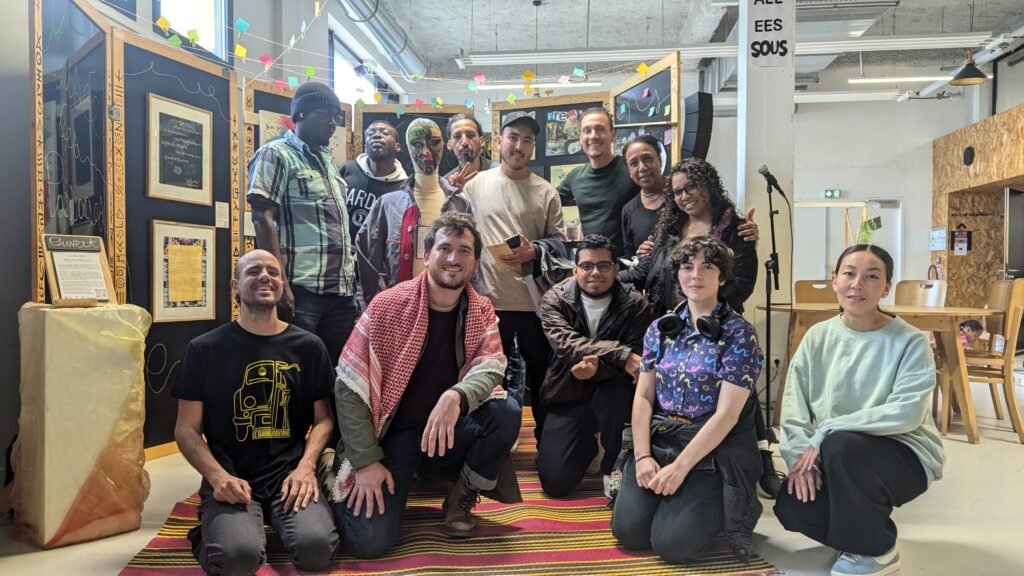
The Museum of Passages was born from a simple yet essential desire: to offer a space for expression to people in exile and the communities that welcome them, so that their stories, cultures, and journeys can find a place, a voice, an echo. Coordinated by Pangée, in partnership with ChapitÔ and CAES France Horizon, this participatory project challenges the traditional museum model. Here, it is not experts who decide what deserves to be exhibited, but those who carry within them stories, objects, traditions, and memories to share.
A museum that belongs to those who create it
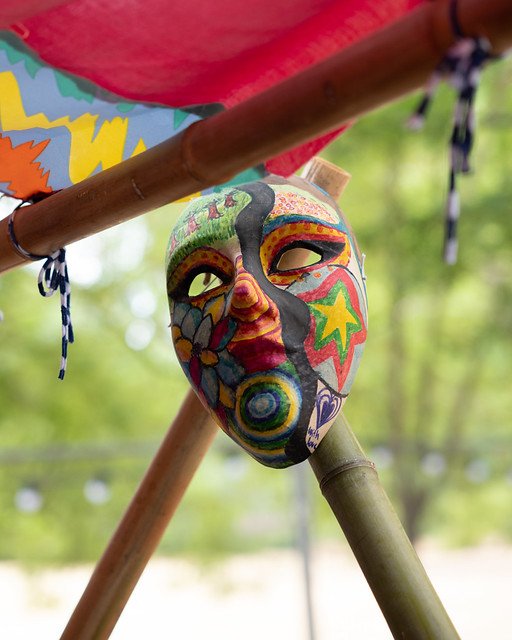
In a deeply collaborative process planned over nearly seven months, more than 60 participants, mostly asylum seekers, contributed to shaping this museum through 12 artistic workshops. The participants, guided by artists and intercultural facilitators, created one or more works of art: sculptures, paintings, texts, dances, and more. Each exhibited creation bears witness to a personal and collective experience, whether it be a recipe passed down through generations, a poem evoking exile, a drawing laden with memory, or an ancestral song.
A new way of telling the story of the arcades
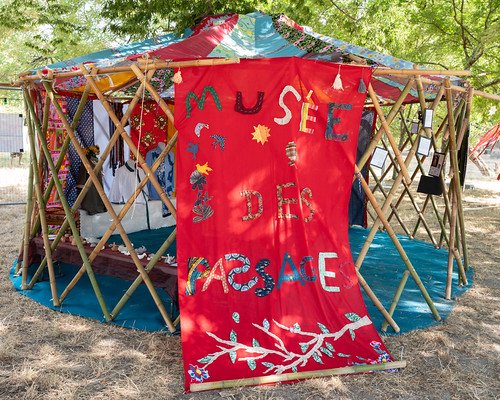
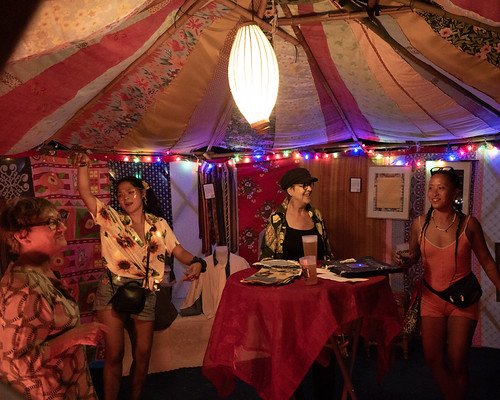
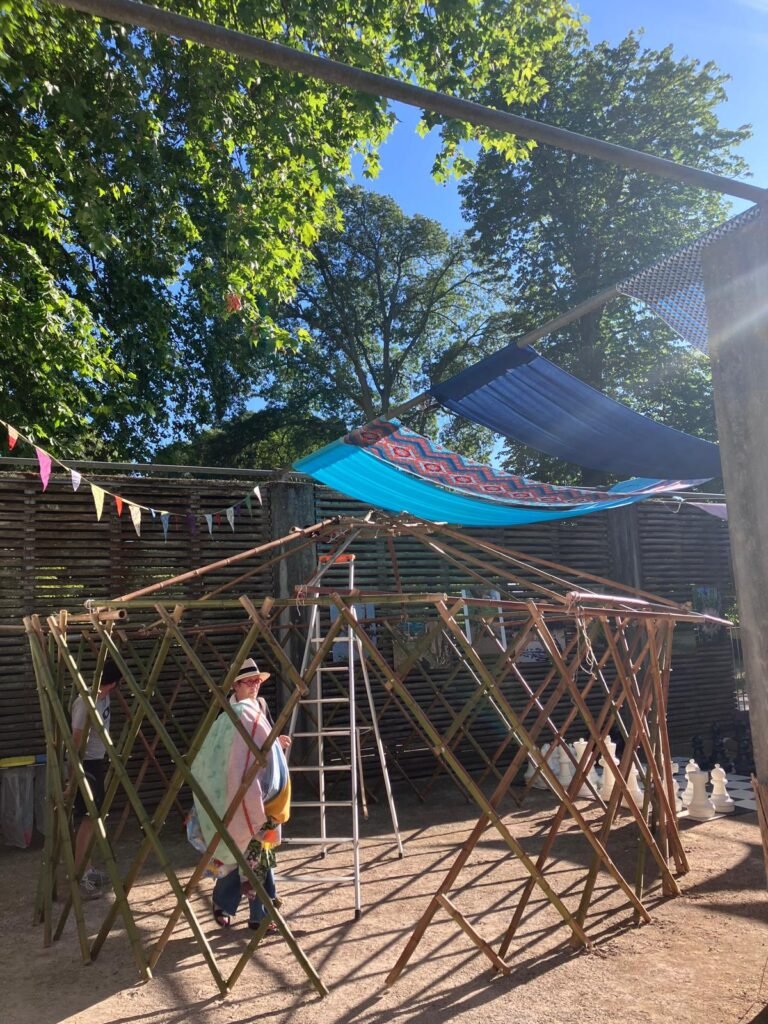
Museums are often places where History with a capital H is recounted. The Museum of Passages, however, aims to be a place where individual history meets collective history. It explores the notions of passage, transmission, and transformation, highlighting the richness of migratory trajectories and the weaving of cultural identities. Here, each contribution bears witness to a movement, a connection between a Before and one After, between a here and one elsewhere. The Museum of Passages is housed in an eco-constructed yurt, built during a participatory construction project; the fabrics covering it were sewn during workshops. This structure, evoking nomadism and movement, allows for complete immersion in a museum space that visitors experience with their eyes, ears, and entire bodies.


A space for emancipation and dialogue
The project is based on fundamental values: inclusion, by giving a voice to those who do not often have a say; co-construction, by allowing participants to decide together on the form and content of the museum; artistic creation as a tool for expression, by creating a dialogue between visual arts, literature, music and orality; and finally intercultural exchange, by valuing the diversity of stories and journeys.
The Musée des Passages is not confined to a single exhibition: it evolves through contributions and encounters. Each edition is enriched with new testimonies and new creations, making this space a living museum where the voices of exiles and residents resonate together.
By valuing the cultural signifiers of each individual, this project invites us to change our perspective on exile and migration, and to consider these passages not as ruptures, but as bridges that connect peoples and histories.
A collective and empowering dynamic
THE Museum of Passages has been enriched thanks to the active participation of the student association MEMO'ART, who joined the project to lead workshops and co-create new exchange and transmission mechanisms. By integrating their expertise in cultural mediation and art history, the members of MEMO'ART helped to diversify approaches and strengthen the participatory dimension of the project.
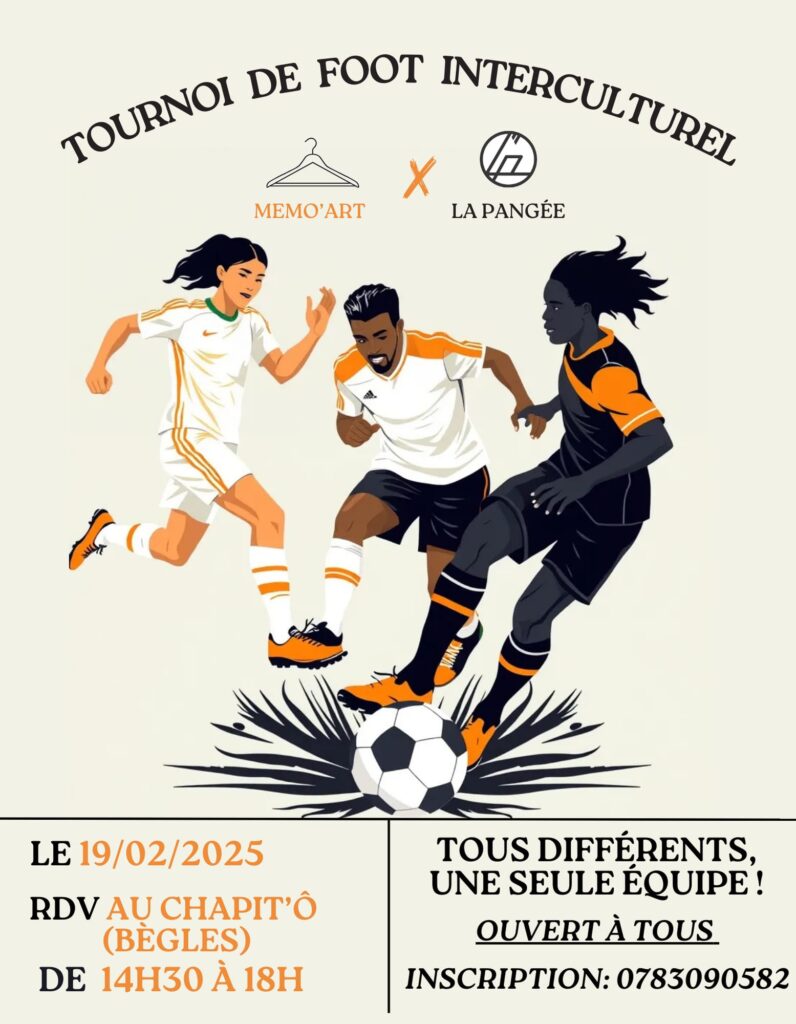
In addition to the art workshops, informal times were organised to encourage encounters and create links beyond linguistic and cultural boundaries: a football tournament, a moment of sharing and conviviality, as well as a visit to the city of Bordeaux, allowing newcomers to better understand their environment and to appropriate the urban space.



Driven by the richness of those who bring it to life, Pangée represents a mosaic of voices, languages, backgrounds, skills, professions, and perspectives. Rooted in a dynamic of intercultural projects, the association constantly builds bridges between the programs it coordinates and supports. It is in this spirit that we have integrated participants into other association activities, thus fostering genuine inclusion through collective practice: sewing workshops, participation in the intercultural fashion show. Des Fils et des Mains, organization of carnivals, contribution to the festival the Way of the Peoples. These bridges between projects not only allow us to value the know-how and stories of each individual, but also to forge lasting links between people and communities.